As Danielle mentions, visual
storytelling is definitely a great way to engage our audience. By distilling
the essence of each interview into a compact quote and then presenting these
'essential wisdoms' in a consistent visual format, our feature will have a strong, readily
identifiable style and aesthetic.
The
longform interview material is there for more indepth content; but, for the
web-surfers who are just flicking from page to page on their smart phones in
between train stops on the way to school/work, these 'visual sound bites'...
sight bites you might say... are our hook.
To make our feature and our interviews distinctive we need a recognisable aesthetic to our content which sets us apart. For each interview, I think there should be an accompanying image of the interviewee in a black and white wide medium shot, holding up a blank placard.
Onto this placard we would photo shop the best pull quote from their interview, creating a visual engagement with the story as well as easily shared content on social media platforms. Making these images as interesting and inspirational/useful as possible would encourage people to want to share them with friends; essentially a branding exercise.
If we use a white/plain background we could then play with colour in the quote so to draw attention to it and adding a little more interest through contrast to the black and white image. This house style of photography is easily replicated for consistency while remaining distinctive to our piece.
All the photos could be displayed in a photo gallery (under one of the tabs) as well as in the top left corner of their story, potentially with in-built social media sharing buttons (share, tweet, +1 etc) to facilitate a bit of free viral marketing.
What's everyone's thoughts on this house style? Any suggestions, improvements, criticisms?
Multimedia
sites like YouTube, Myspace, PureVolume, and many others allow amateur
musicians to post audio or video clips for the general public. The websites are
free to access and free to post on, providing a potentially wonderful marketing
source at no cost. Both original works as well as covers are uploaded. However,
in terms of the probability of an artist or band being discovered, utilising
cover songs, to begin with, make sense. The following is a story of a band who used a
combination of YouTube and well known cover songs to become famous.
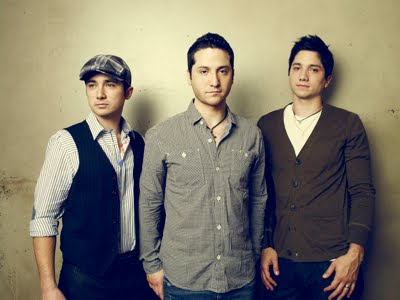
BoyceAvenue is an American mainstream rock band. They formed in Sarasota, Florida, when brothers Alejandro, Daniel and Fabian Manzano decided to aim for a career in music. The band is named
after a combination of the two streets the brothers lived on as children.
As a band that started out on YouTube as a cover band back in 2007. Some of the first few videos they posted included acoustic versions of
songs such as Justin Timberlake’s “LoveStoned”, Rihanna’s “Umbrella”,
and Coldplay’s “Viva la Vida”, among many others. They have since reached remarkable heights, touring worldwide, releasing original albums, and as of August 9, 2011, they started their own independent record label called 3 Peace Records.
Early on, the band wanted to set itself apart from other acts that had
achieved success online by taking its music straight to the people,
live. Believing firmly in the strength of their online fans, and in its
music, the band booked a stand-alone show in New York City in January of
2009, for their first ever performance in the city. Surprising label
and industry folks alike, the show – perceived by others as a gamble –
was an enormous sellout and success.
Behind Linkin Park, BoyceAvenue are the second most viewed band on YouTube (just under 750million video views), and they have a following all over the globe. Their cover of Linkin Park's "Shadow of the day" is their most viewed song on YouTube with over 13million views:
Their YouTube page is brilliantly laid out and demonstrates a great model for artists who want to use YouTube as a platform; there is a comprehensive list of their music and tour dates, there are links to all their social media platforms, it is easy to subscribe to and explore, and there are links to purchase their songs as well as suggested playlists depending on your taste in music.
A certain formula for success?
Obviously just posting videos on YouTube will not necessarily lead to
fame and success. There are countless amateur musicians who post on
YouTube and never get more than a few hundred views. Certainly talent is the most crucial aspect in succeeding in the online industry, and is one of the reasons BoyceAvenue attained so much popularity.
But they are most definitely not the only group to get their break
because of their YouTube videos. Among others, Justin Bieber (as Maddy mentioned in her earlier post) was also discovered because of his YouTube account. Just like BoyceAvenue, his career began with covering other artists' songs:
Summary tips
Multimedia sites allow amateur musicians the chance to access an
audience never before attainable.
Cover songs are often a great way to
reach out to the audience - whenever someone searches for "Shadow
of the Day" or for "I'll Be", the versions by Boyce Avenue and Justin
Bieber will come up.
With the help of multimedia sites, many musicians will
help jump start their career and possibly attain fame and fortune
through the digital exchange of cover songs.
While social media provides the platform, talent is very important to getting the kick start needed in this tough industry.
From the platform of YouTube, original songs can begin to gain reputations and future industry success (through albums and live performances) can start to occur.
Today it seems that sound itself doesn’t quite cut it.
Audiences are demanding and want a performance that is aesthetically pleasing
in every domain- ESPECIALLY those sitting in their underwear in front of a
monitor.
Musicians hoping to get any form of recognition from the
current online music community need to understand one thing:
YouTube is your friend.
If you don’t have a YouTube account stop everything and
create one. Now.
Also if you haven’t got a video camera we suggest you go and
buy yourselves one of those pretty soon too.
A lot of big names in music have YouTube to thank for
helping them make it in the industry who wouldn’t have normally had the
opportunity or the resources to be discovered.
Here’s one example you’ll probably know.
From a home video singing in his living room in clothes that
are too big, to making $116,423 within the first week of his new single
“Boyfriend” (still in clothes that are too big), it’s not hard to see that
Justin Beiber, or his mum, really hit something on the head here.
While Beiber might not be exactly your style, it seems that using
YouTube has really paid off for a number of other great artists including TerraNaomi, Lisa Lavie, Mia Rose and many more. Talent scouts are constantly
scanning the web for up and coming talent and what better way is there to be
seen than showcasing everything you’ve got right there on their computer
screens.
After our presentation and feedback on the website/multi-page feature confusion I started thinking about ways we could set out our feature. With our ideas for multiple sections, I think this would best be displayed using tabs across the top, making it accessible and immediately noticeable. The other option is to have a list of bullet points in the sidebar but I don't find it aesthetically pleasing, nor does it really attract the viewer to explore the other pages.
At Music Hub, we are seeking to
provide the resources for aspiring individual artists and bands with no current
industry affiliation.
Our website, being Sydney based,
allows effective local engagement with these aspiring artists.
While we want to create a new space
for these young and fresh artists (16-35year olds) to explore, we will be
seeking to network and make affiliations with existing sites such as triple J,
3CR, or FBI radio, so as to tap into their existing online communities and
explore the ways that these sights connect with their audiences.
One of our greatest challenges has
been confronting exactly how we will convince aspiring artists that our website
actually provides the information they need, and what functionality is required
to appeal specifically to musicians. We combated this in a few ways;
Firstly we recognised
the importance of sound as a device to draw in the audience, be it through a
constant media player in the background, or even creating upload areas where
people can give feedback and communicate amongst each other.
Secondly we recognised
the importance of the visual. As Carmen mentioned we want to provide a twofold
method of exploring the site, with bite size snippets, which lead to longer
features. Through the use of video and photography, rather than a constant
stream of words, as well as Facebook and Twitter snippets and links, we feel
our audience will most appropriately respond to the messages we are trying to
deliver.
Finally, we realised
the importance of interviewing people within the industry who have a sound
understanding of what it takes to make it as an artist. Through potential
competitions which would allow aspiring artists to be mentored, as well as
creating events external of the website, we are seeking to encourage our
audience to be part of something bigger than just a website
As you know, I host a program on Eastside Radio and we only feature independant, non-commercial music. This could be useful for our blog somehow. We have a website that has program blogs, news, gig guides and more so it could be a useful building block for our own blog.